FinelinerEasy

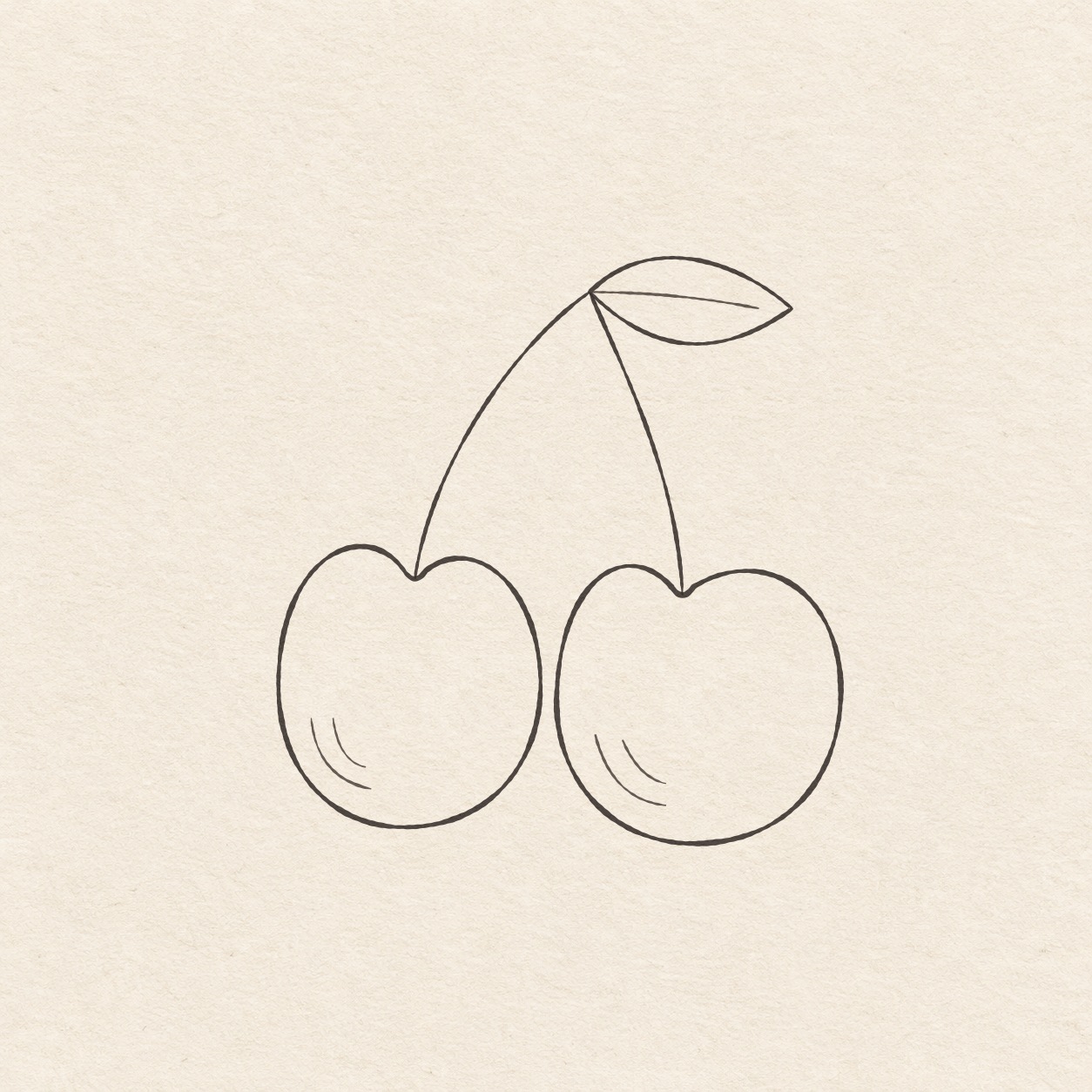
Pair of cherries
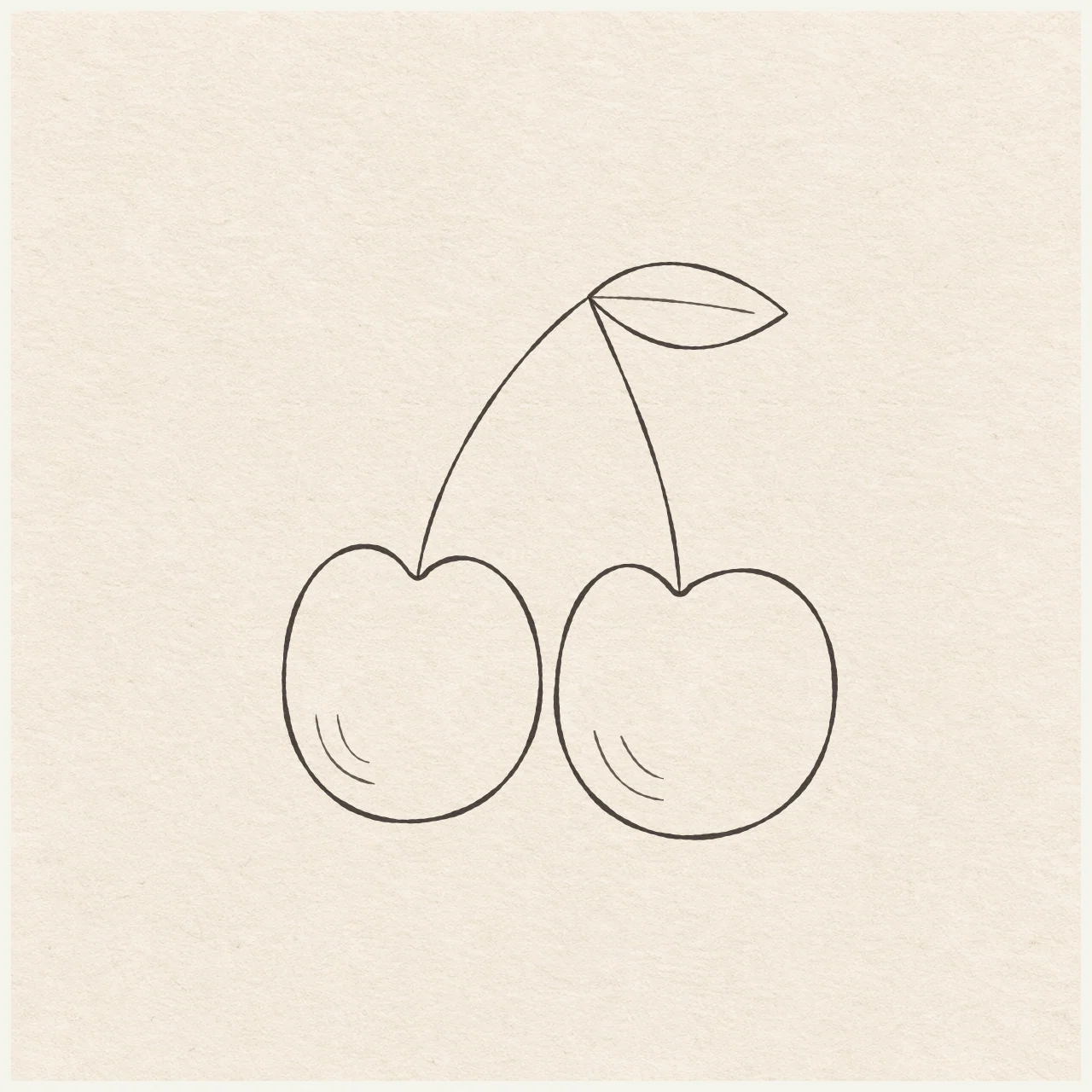
Round two unequal cherries through light crosses, join their dimples with high curved stems, and add one pointed leaf.
Follow the drawing tutorial
Round two unequal cherries through light crosses, join their dimples with high curved stems, and add one pointed leaf.
Start the 6-step tutorialA small thing to tryWhile still in pencil, check the left, right and bottom turns against the cross-end dots. The upper dot locates the dimple level; the shoulders rise a little above it. Keep the small gap between the two fruits.
Draw it, one step at a time
Draw a pair of cherries
Round two unequal cherries through light crosses, join their dimples with high curved stems, and add one pointed leaf.
What you’ll need
- HB pencil
- Eraser
- Ruler
- Scrap of paper with a square corner
- Fine black pen
- Drawing paper
Before you start
This example is about 10.4 cm wide and 11 cm tall. Choose where the whole pair will sit on your own paper. Picture-left and picture-right mean the sides of the drawing. Use light pencil and keep the measuring marks until Cleanup. Rehearse each freehand curve above the paper; erase and redraw a misplaced pencil curve before inking.
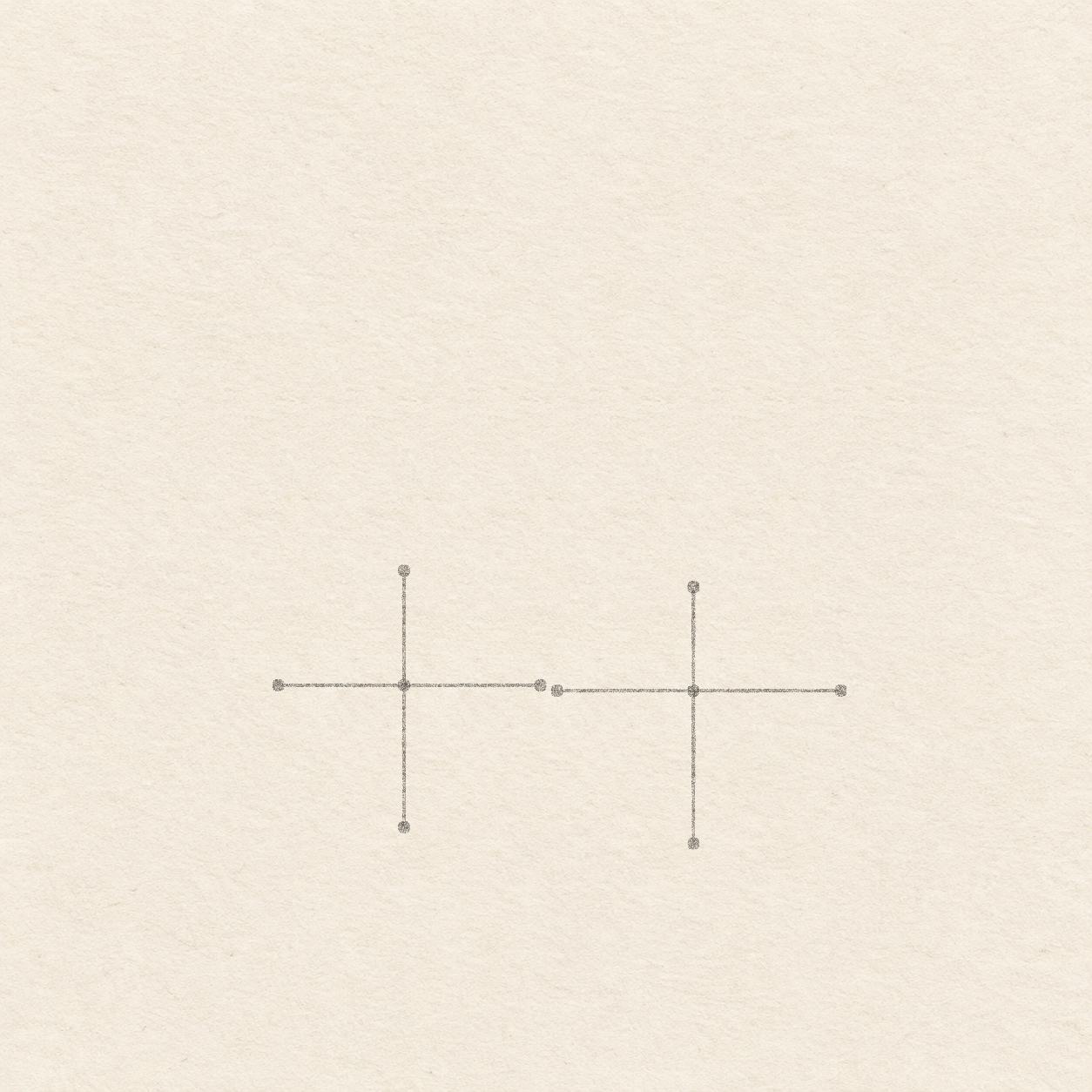
Drawing 1 — Place the two fruit crossesView larger PencilPlace the two fruit crosses
Instructions for Drawing 1 — Place the two fruit crosses
- Choose the center of the left cherry. Before marking it, leave 3 cm to its left, 8.5 cm to its right, 8 cm above and 3.3 cm below, plus a margin. Then make a small pencil dot. Move this first dot if the complete pair and high leaf will not fit.
- Through the first dot, rule a level guide 2.3 cm left and 2.5 cm right. Align one straight edge of the square scrap with that guide and put its square corner at the center dot. Use the adjoining edge to rule an upright 2.1 cm up and 2.6 cm down. Keep the guides light. The upper end gives the dimple level, not the highest shoulder. Keep the upright square to the level guide. The lower end sets the left fruit’s bottom.
- Align the ruler with the level guide, zero at the first dot, extending the ruler beyond the short guide without drawing a new line. At 5.3 cm right, align one edge of the square scrap with the ruler and seat its square corner at the measured position. Measure 1 mm down along its adjoining edge and mark the right center. Mark only the dot; do not extend the light level guide.
- Through the right center, rule a level guide parallel to the first, extending 2.5 cm left and 2.7 cm right. Align one edge of the square scrap with this new guide and put its square corner at the right center. Along its adjoining edge, rule an upright 1.9 cm up and 2.8 cm down. Its upper end locates the right side of the shallow dimple, not the highest shoulder.
- Put one small dot at each of the eight cross ends so you can find the limits even where the light lines taper. The right fruit is slightly wider and its bottom dot is 3 mm lower than the left one.

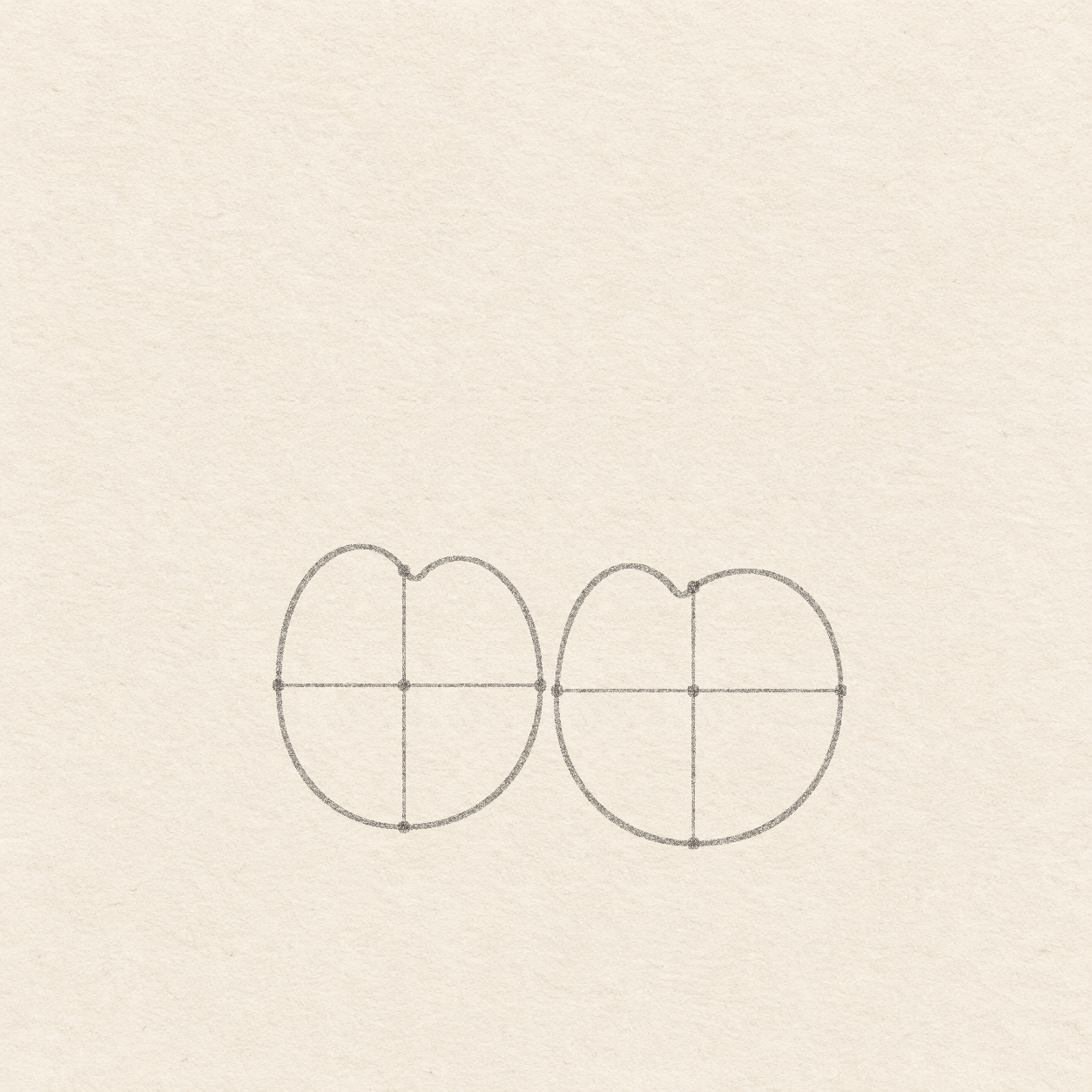
Drawing 2 — Round the cherries and dip their topsView larger PencilRound the cherries and dip their tops
Instructions for Drawing 2 — Round the cherries and dip their tops
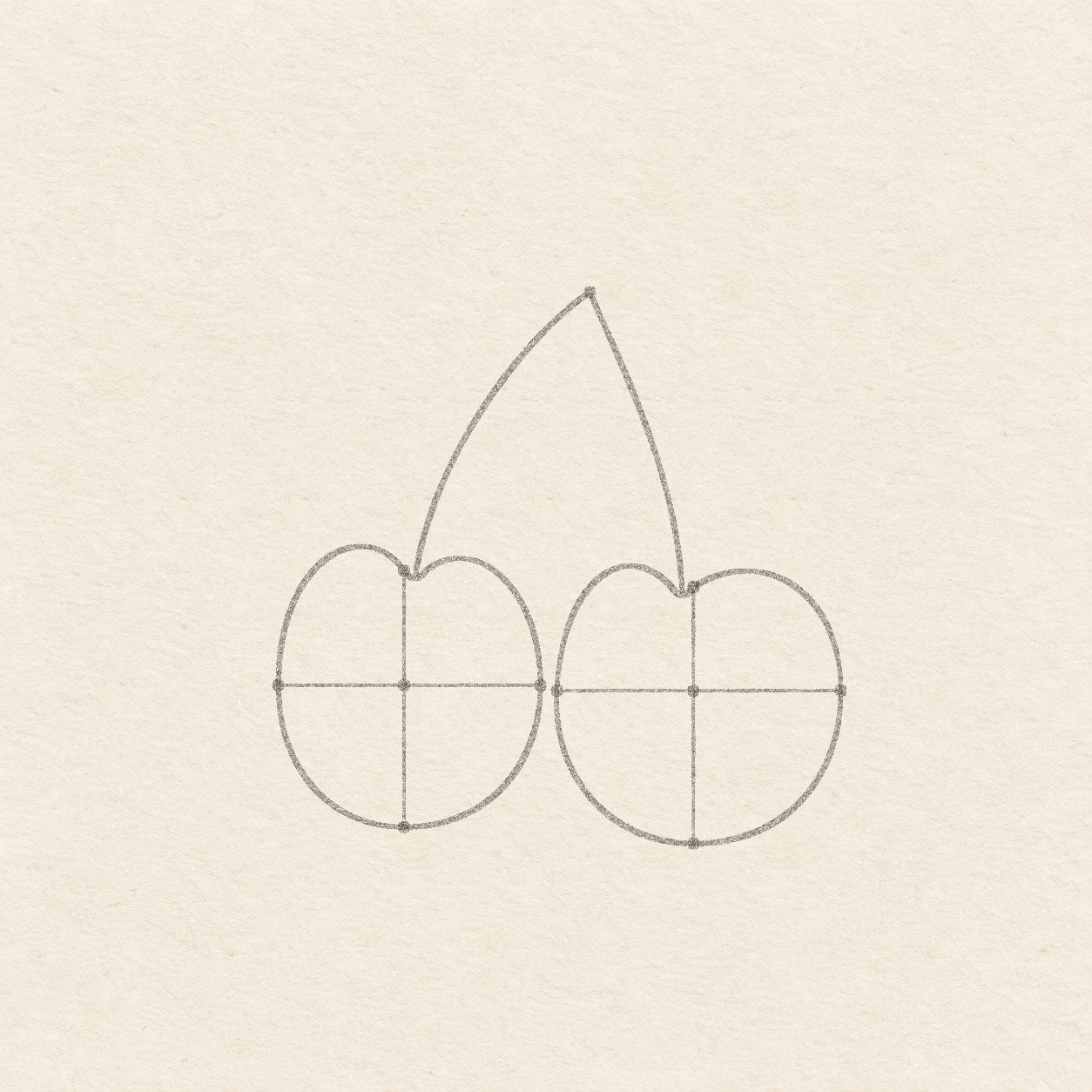
- From the upper dot of the left cross, freehand up and left into a rounded shoulder no more than 6 mm higher. Continue through the left end dot, the bottom dot and the right end dot. Round the right shoulder back to a point 4 mm right of the upper dot, at the same height. Join that point to the upper dot with a shallow downward dip, at most 2 mm deep. The side and bottom dots are contour turns; keep the curve within 1 mm of those limits. Do not draw the cross as the outline.
- Start 4 mm left of the right cross’s upper dot, at the same height. Freehand a rounded left shoulder no more than 6 mm higher, then curve through this cross’s left, bottom and right dots. Round the right shoulder back to the upper dot. Close the top with a shallow downward dip, at most 2 mm deep. Keep the fruits separate, including the narrow gap between their facing sides. Correct either outline in pencil before adding stems.

Drawing 3 — Curve both stems to one high joinView larger PencilCurve both stems to one high join
Instructions for Drawing 3 — Curve both stems to one high join
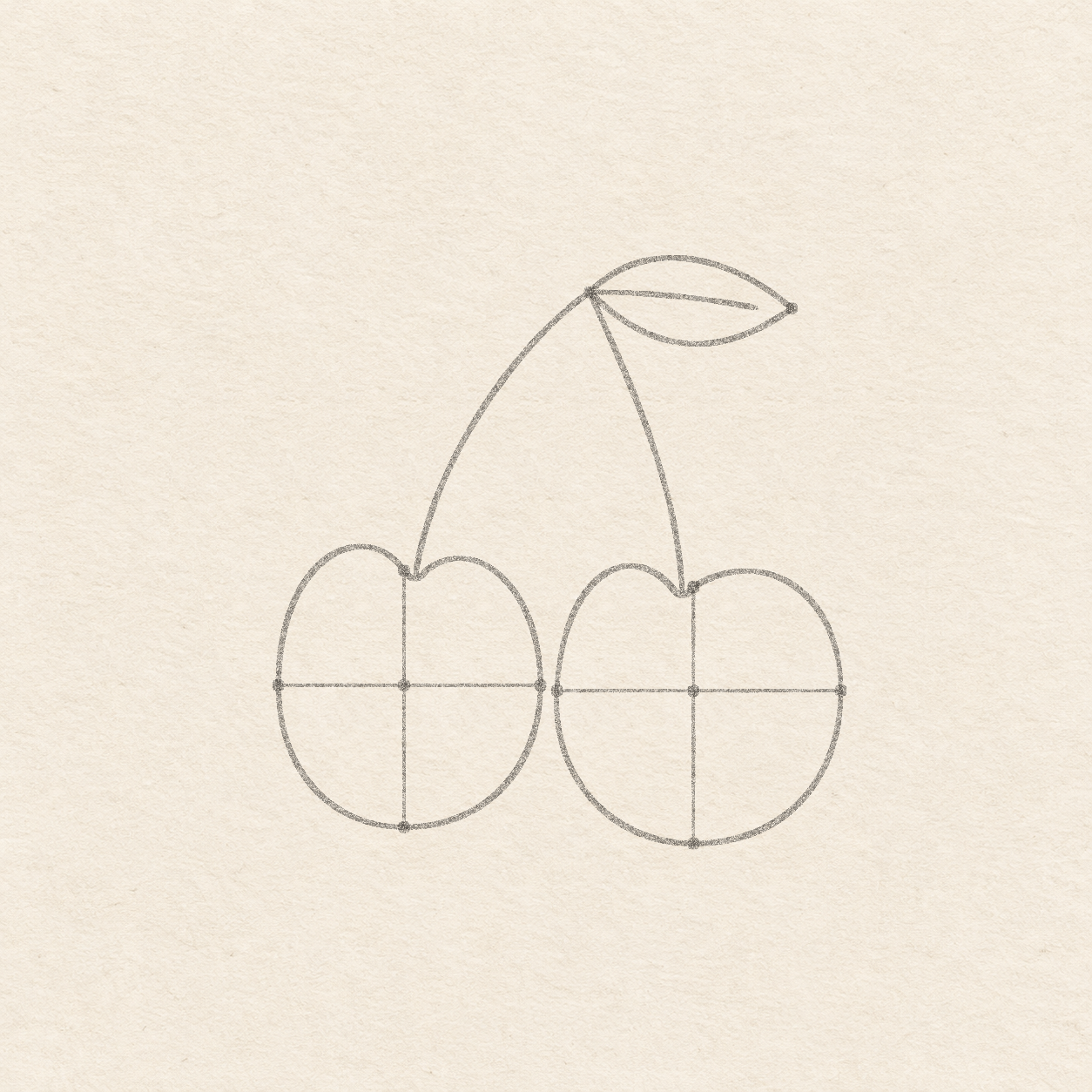
- Align the ruler with the left cross’s level guide. From its center, measure 3.4 cm right. Align one edge of the square scrap with the ruler, seat its square corner there and measure 7.2 cm upward along its adjoining edge to mark the shared stem dot. Use only the dot: do not add another long measuring line.
- From the lowest point of the left cherry’s dimple, draw one freehand stem up to the high dot. Bow it left of a straight route between those ends, by no more than 7 mm. Touch the dimple and the high dot. Keep this stem separate from the right fruit.
- From the high dot, draw the second stem freehand down to the lowest point of the right dimple. Bow it to the right of the straight route between those ends, by no more than 4 mm. Both stems meet at the high dot; their lower ends meet their own fruit outlines.

Drawing 4 — Shape one pointed leafView larger PencilShape one pointed leaf
Instructions for Drawing 4 — Shape one pointed leaf
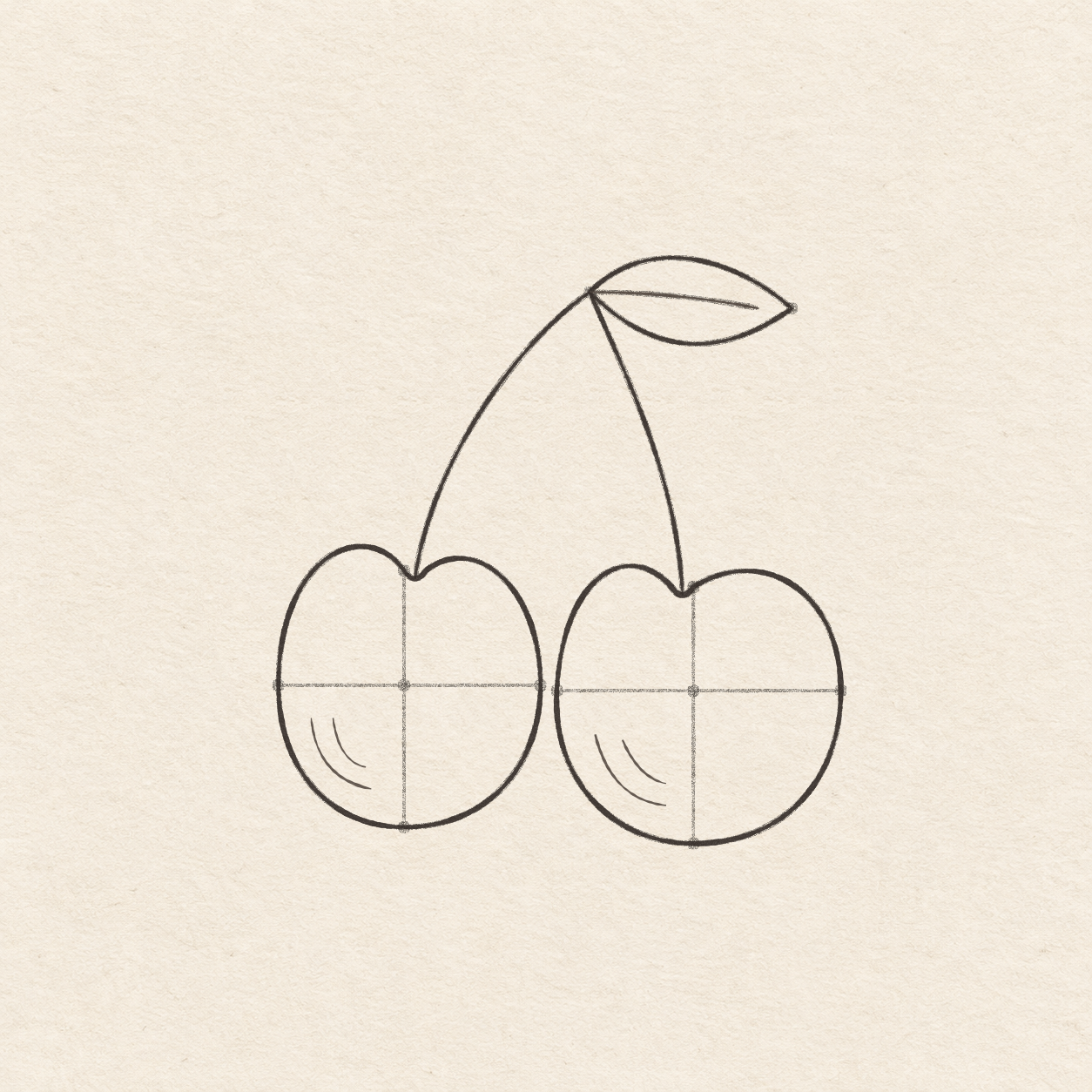
- Place the ruler through the high stem dot, parallel to the fruit level guides. Measure 3.7 cm right, align one edge of the square scrap with the ruler, seat its square corner there and measure 3 mm down along its adjoining edge to mark the leaf tip. The leaf will stay within 1 cm above and below the stem dot’s height.
- From the high stem dot, freehand the upper leaf edge up and right, bowing about 8 mm above the straight route to the tip. Taper into the tip. Return with a lower curve bowing about 8 mm below that route and close at the same stem dot. Leave the leaf’s inside open; both edges meet at each pointed end.
- From the shared stem dot, freehand a shallow curve through the middle of the leaf toward its tip. Stop about 6 mm before the tip. Keep this short vein inside the leaf, with paper between its far end and the outline.

Drawing 5 — Ink the pair and add short inside curvesView larger InkInk the pair and add short inside curves
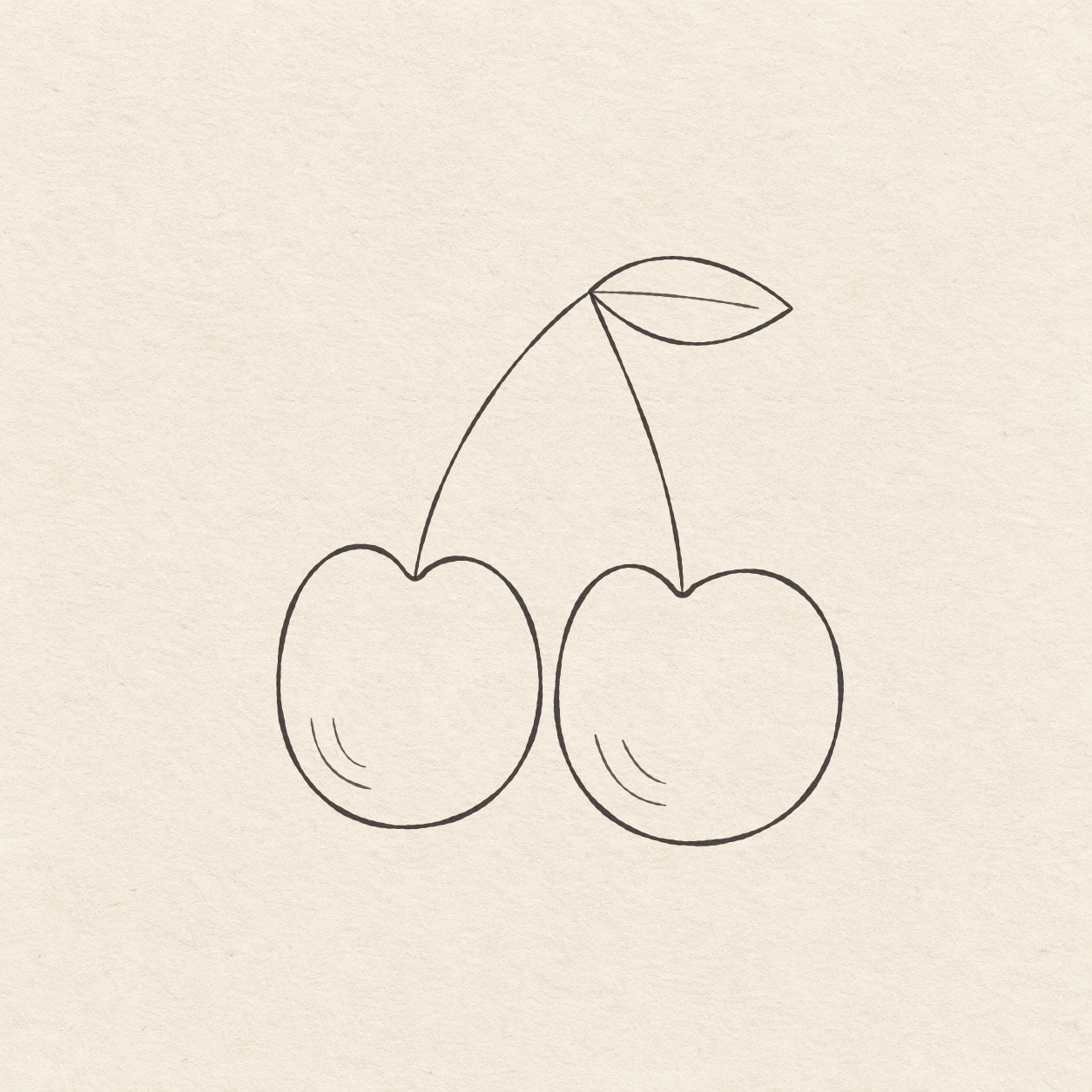
Instructions for Drawing 5 — Ink the pair and add short inside curves
- With the fine black pen, trace the complete left cherry outline, including its shallow dimple. Keep every pale guide until Cleanup. Preserve the round side and bottom turns.
- Trace the complete right cherry outline and its shallow dimple. Keep a narrow visible paper gap between the facing fruit outlines.
- Trace the left stem from its dimple to the high join. Touch the inked fruit at the dimple without leaving an unintended paper break.
- Trace the right stem between the high join and its own dimple. Join both ends; do not retrace the fruit edge.
- Trace both edges of the leaf, closing its tip and its attachment at the stem join. Keep the leaf’s broad inside as open paper between its two ink edges.
- Trace the short leaf vein and stop at its existing end before the tip. Leave the vein’s existing far end separate from the pointed ink border.
- Inside each cherry’s lower-left part, freehand an outer curve down and right, following the actual round outline about 5–7 mm inside it. Make it about 2 cm long. Add a shorter inner curve about 1.2 cm long, 3–5 mm farther inward from the first curve, leaving paper between them. Leave a paper gap between the two curves and both permanent outlines. The pale crosses may still run through this area until Cleanup.

Drawing 6 — Erase the dry pencil guidesView larger CleanupErase the dry pencil guides
Instructions for Drawing 6 — Erase the dry pencil guides
- Fill a small patch on a scrap of the same paper with the same pen. Rub the patch gently with your eraser. If it smears, wait and test again. Once the patch stops smearing, erase both fruit crosses, their center and end dots, the high stem dot, the leaf-tip dot and all stray pencil beside or between the permanent lines. Keep the permanent ink intact.
If something looks off
If the cherries lose their roundness
While still in pencil, check the left, right and bottom turns against the cross-end dots. The upper dot locates the dimple level; the shoulders rise a little above it. Keep the small gap between the two fruits.